Boston Fern Care Tips for Keeping These Louisiana Favorites Lush and Healthy
Nephrolepis exaltata
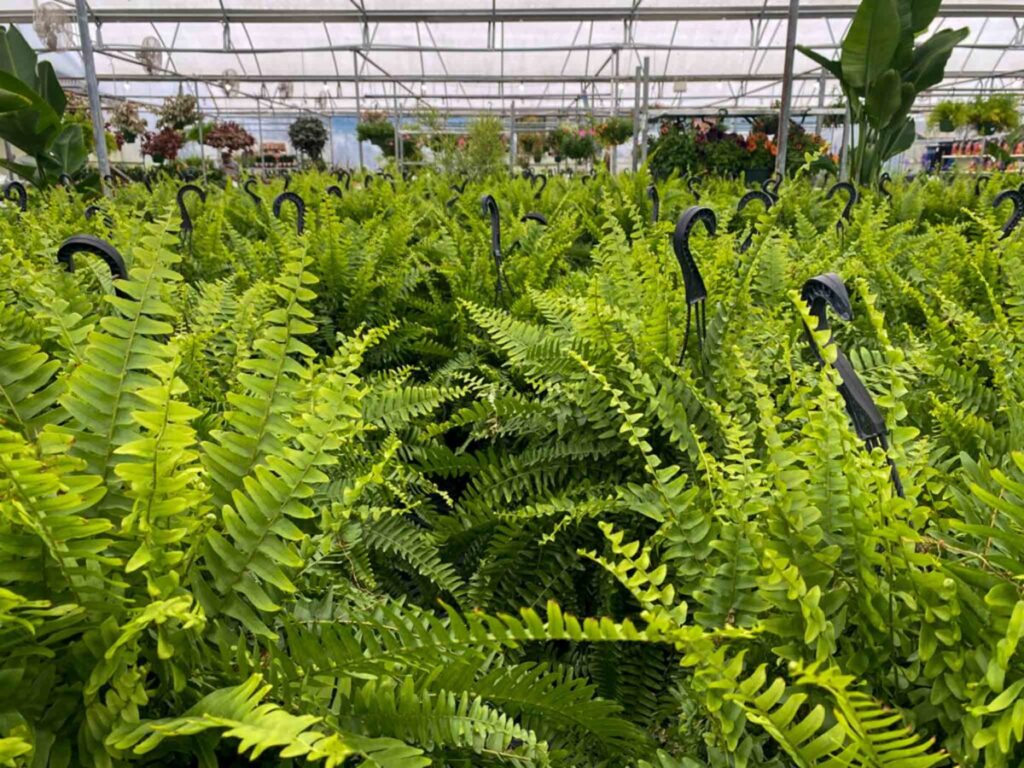
Boston ferns are some of the most easily recognizable ferns in the south. These tropical sword ferns are perfect porch plants and can also thrive inside.
Characteristics:
Dimensions: 3-4’ H X 3’ W
Growth Habit: Upright and spreading
Foliage: Medium green fronds with alternating leaflets
Blooms: Non-flowering
Hardiness: 9-12. They are happiest with temperatures between 60-75 degrees F, but planted ferns can survive temperatures as low as 25-30 F.
Toxicity: Boston ferns are considered nontoxic to humans, cats, and dogs. In fact, some cats will enjoy playing with the fronds. This is a great addition to any collection shared with a feline friend.
Care Requirements:
Light: Prefers indirect light. The filtered, dappled light of a porch is generally well suited to their needs. Morning sun is ideal. Full afternoon sun can burn the fronds. If you intend to grow a fern inside, especially in the winter months, give it the brightest indirect light possible.
Water: Do not allow your ferns to dry completely out. This will be easiest to judge in hanging baskets. When your hanging basket feels light, water thoroughly. For potted ferns, feel the soil and water when the top of the soil feels slightly dry. Watering needs will change with temperatures. During warmer months, watering will become more frequent. These ferns are native to humid forests and appreciate added moisture in the air. When your indoor plants aren’t getting the proper humidity, their leaf color suffers and there is increased risk of pests. The best ways to increase humidity for indoor plants are grouping them together or by using a humidifier. If you have many plants, group them together! If not, use a humidifier to consistently increase the humidity in the room in which your plants live.
Soil: Moist, humus-rich, and well-drained. When it is time to repot your ferns, consider adding some extra peat moss and perlite to your favorite potting soil to improve airflow and drainage. These plants do not like to stay root bound. It is time to repot your ferns when they out grow their current containers, usually every two to three years. Ferns purchased from a nursery or retail outlet might need an initial repotting sooner.
Fertilizer: In general, ferns are not heavy feeders. This means that they will usually need less fertilizer- not that they don’t need fertilizing! In spring and summer, fertilize your ferns once a month with a light but balanced fertilizer (something like 10-10-10). If you use a slow release fertilizer, it is usually okay to use half the recommended rate. Over fertilizing your outdoor ferns in the autumn and winter months can cause more harm than good, as they are not actively growing. Tropical indoor ferns can grow year-round. Fertilize them once during the cooler months. You can do this easily with a liquid feed and some distilled water.
Pruning: Remove any dead or diseased fronds at the base. If your ferns are planted in the ground, you can prune them to the ground in early spring to regenerate.
Uses:
- Great as a potted porch plant or hanging basket, also great for a warm season ground cover under a tree that provides dappled light
- Appropriate as an indoor house plant for rooms with bright indirect light
A common problem with boston ferns is browning in the fronds. Browning can be caused by using a soil that is too heavy, improper watering, lack of humidity, too much light, or mechanical injury. If your plant is experiencing browning, check these conditions to see if there’s something your fern is lacking! Invest in a moisture meter and humidity reader to help gauge your indoor conditions.
Boston Ferns
Nephrolepis exaltata
- Pet-Friendly
- Full Shade
- Keep Soil Moist
Whether indoors or on the patio, in a large ceramic pot or a hanging basket, Boston Ferns are a generational favorite!