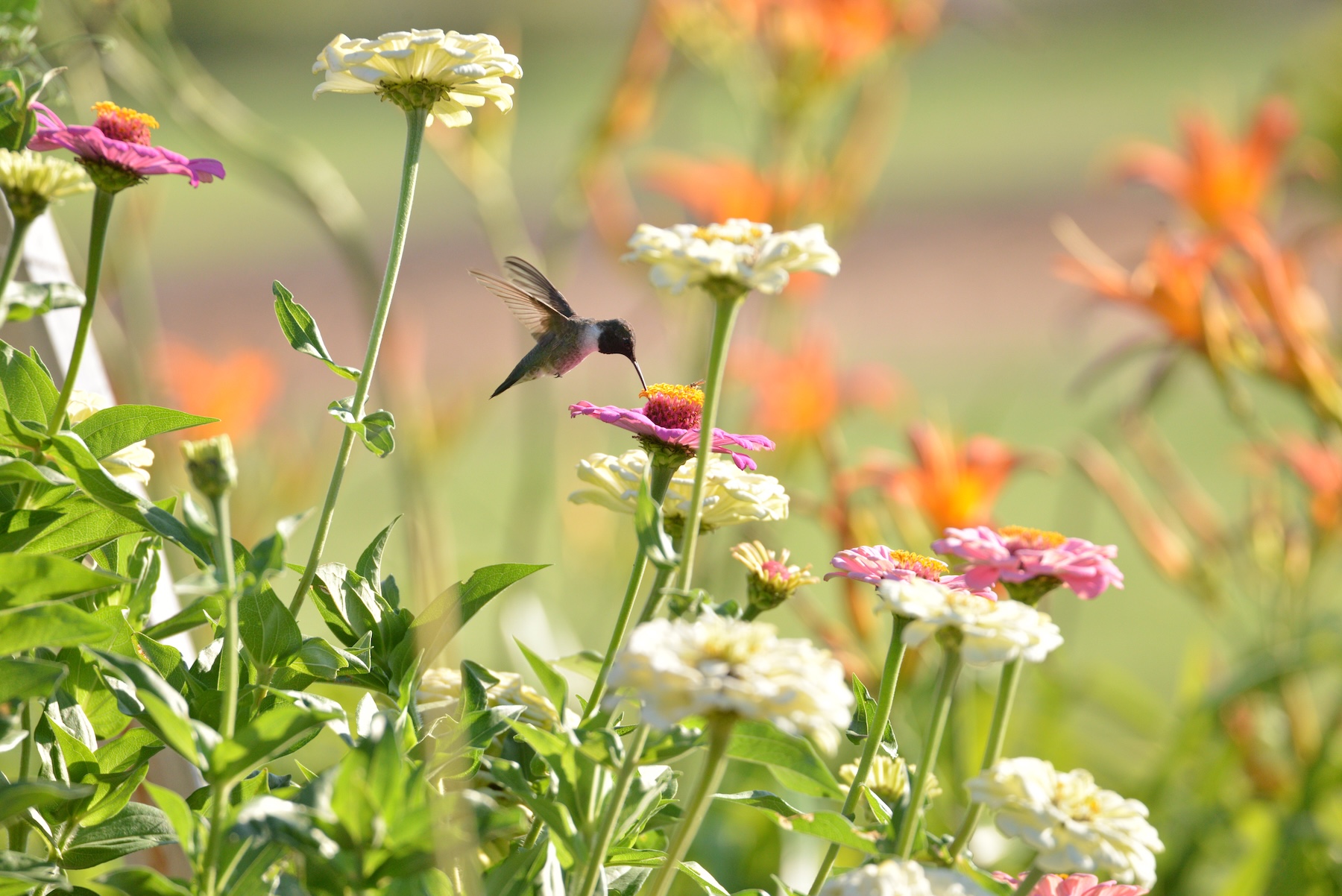
Red Imported Fire Ant Control Strategies for Louisiana Gardens and Lawns
It’s hard to imagine life in the South without Fire Ants. Whether it’s crashing your tailgate or jumpscaring you in the garden, these ubiquitous invertebrates seem inescapable. I’m sure every person reading this has at some point been stung by a fire ant. Before I start my articles, I ask friends and family what they hope to learn and use that to guide my writing. This week, the answer was a nearly unanimous “How to get rid of them.”
Readers and people who know me are familiar with my live-and-let-live attitude towards all kinds of pests, but I must admit that even I have my limits. We have a variety of native ants in Louisiana, so first try to ascertain what you’re dealing with. This handy guide or apps such as iNaturalist can help you distinguish different types of
ants.

These are the most common of the 56 ant species found in Louisiana
Get Down on the Ants Floor
Red Imported Fire Ants (RIFAs) were likely introduced to the Southeast through Mobile,
Alabama, in the 1930s. They most likely traveled in earthen ballast on ships and have continued to spread through temperate climates, reaching Louisiana by the 1950s. Identifiable by their red color and vaguely heart-shaped heads with a ridge between the eyes (if you can
get that close), these mound-builders are perhaps best known for their painful sting.
When threatened or disturbed, they first bite to attach themselves, then sting and inject venom. These stings often develop into painful white pustules; while you may be tempted to squeeze this, leaving them alone lets them heal more quickly and without scarring. Covering with a bandage can help with discomfort and discourage scratching.
In addition to the biting, RIFAs are an invasive and aggressive species that eat sprouts, insects both beneficial and harmful, and often target native wildlife such as ground-nesting birds and lizards (as few as a dozen ants can kill small lizard). In areas where they have become prevalant, some species such as Fence Lizards (Scleroporus undulatus) have evolved adaptations to deal with these ants in a relatively short time frame.
Eastern fence Lizards usually rely on camouflage to remain hidden from threats, and when first encountering RIFAs they will remain motionless as they are eaten. A study conducted in 2009 by Tracy Langkilde demonstrated that Fence Lizards who had survived previous encounters with RIFAs adapted their behavior, flicking the ants off of themselves and running away. Additionally, they had developed longer limbs which gave them better chances of outrunning the ants.
This is remarkable, especially given the fact that less than 100 yeas have passed since the ant’s introduction (a blink of an eye in evolutionary timescales).
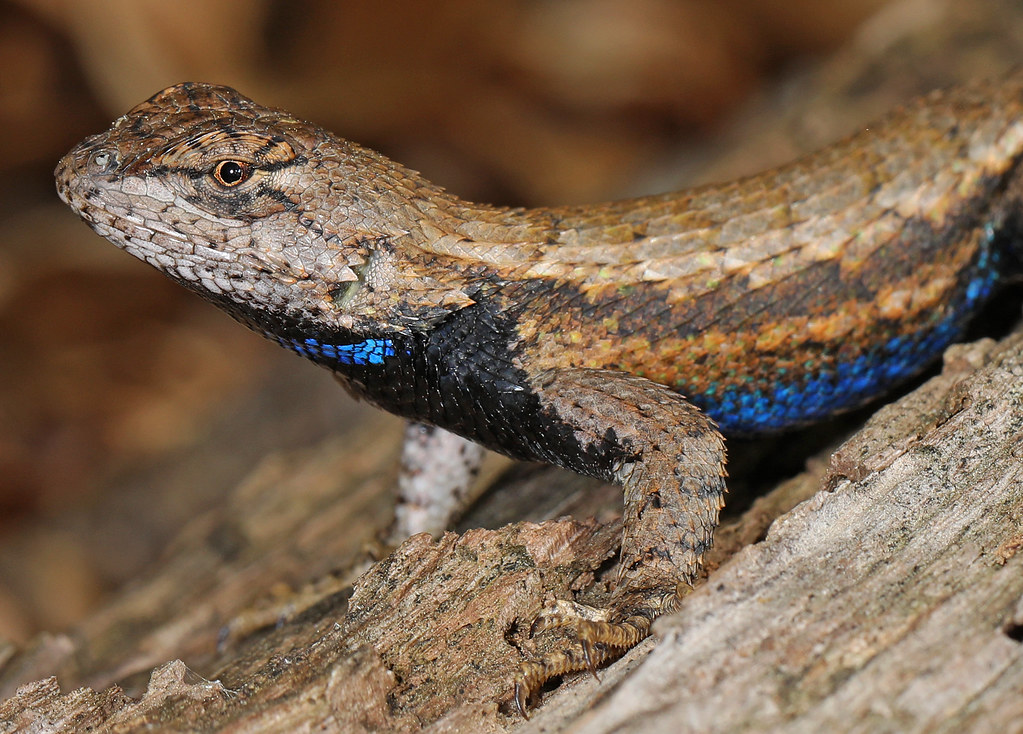
An Eastern Fence Lizard, who is not afraid to change to survive
Credit: Judy Gallagher
Source https://www.flickr.com/photos/52450054@N04/40667357613
Controlling Red Imported Fire Ants: Do the Louisiana Two-Step
Controlling RIFAs is difficult for a variety of reasons. As with any insect, their short
generation times and quick population growth mean they adapt quickly to pesticides. Many
methods are only effective short-term or in a limited area. Recommendations for control are
constantly adapting, with home remedies abundant and variably successful. Their habits off
foraging underground to avoid desiccation mean you often only see them when rains bring up
the water table or a mound has been disturbed, often by which point the population is
considerable.
Treatment of RIFA infestations should begin when temperatures are between 65*F-90*F and ants are actively foraging. All treatments should be applied when there is no chance of rain within the next 4 hours and as always, homeowners are legally obligated to read and follow directions on their products.
Baits can be corncob grits either impregnated with poisons or
insect growth regulators (IGRs) and mixed with attractants like soybean oil. Both work by different mechanisms. IGR baits such as Ferti-Lome’s Come and Get It!! (Sold in our nursery) offer 80%-95% control when used correctly.
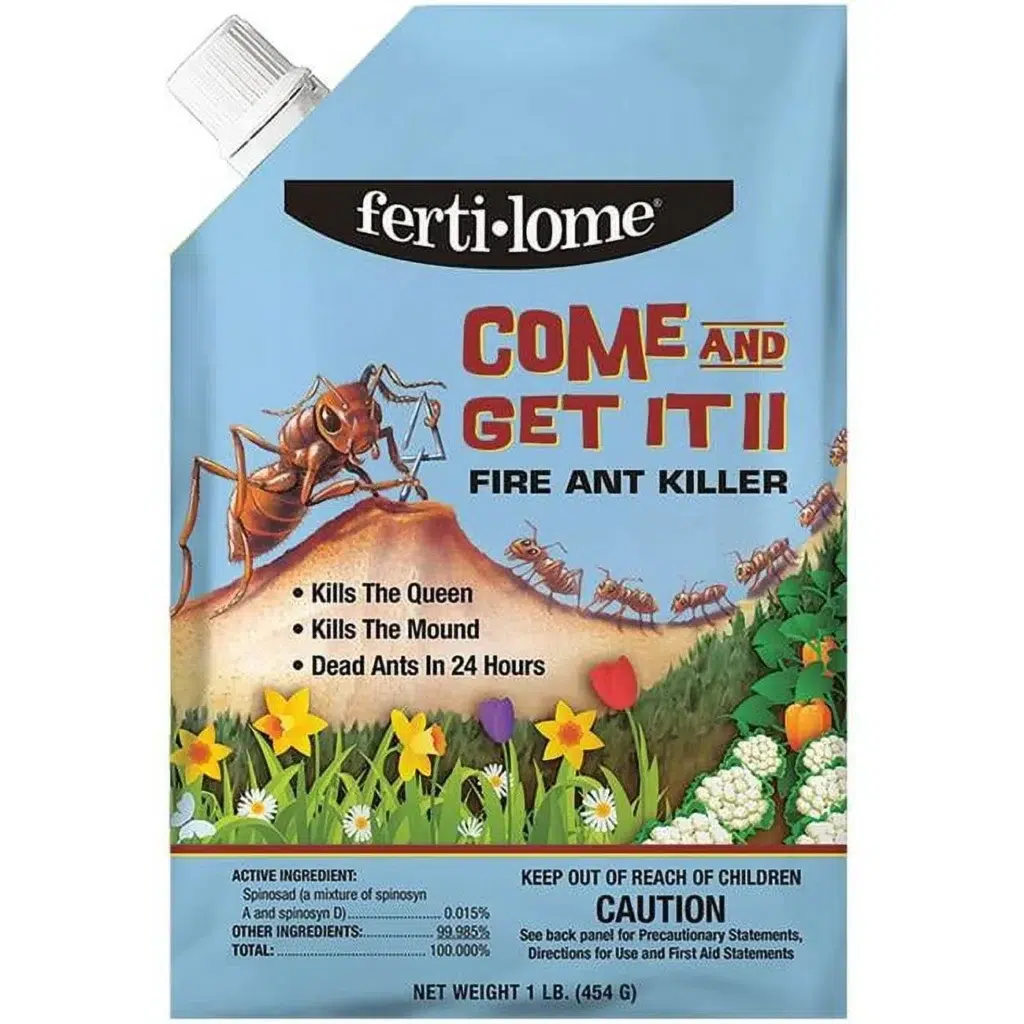
Insect Growth regulators such as Spinosad offer slower but more effective treatment than insecticidal baits.
The downside of IGRs is that they take longer to kill the colony, functioning by chemically sterilizing the ants. However in the meantime, ants remain actively hunting in your yard and will often kill new queens who appear. As a bonus, Spinosad is an organic product produced as a by-product of fermenting bacteria and can be used on edible plantings.
For quicker results in non-crop plants, insecticides such as Hi-Yield Fire Ant Control Granules with Acephate can be applied around (not on top of) the mound, preferably around dusk or dawn when ants are entering or leaving the nest. Watering a small amount in will agitate the ants and encourage them to come to the surface. Use caution with these
treatments in lawns, as turf can be damaged by excess application.
For thorough control in highly-infested lawns, a two-step program is recommend by various extension services throughout the country. In this process, first apply either an
insecticide or IGR directly to the mound. After 10 to 14 days have passed, apply a broadcast
application of IGR to the entire yard. For best results, repeat twice annually, in spring and in fall.
We'll All Float On
While I may feel no compunctions about going nuclear when it comes to eliminating RIFAs in may yard, I must admit a grudging respect for their ability to survive and thrive in alien and difficult environments. As anyone who has waded through a Louisiana flood can attest, Fire Ants don’t fight each other and scheme for their individual survival; they band together, protect what matters and hold out for better days.
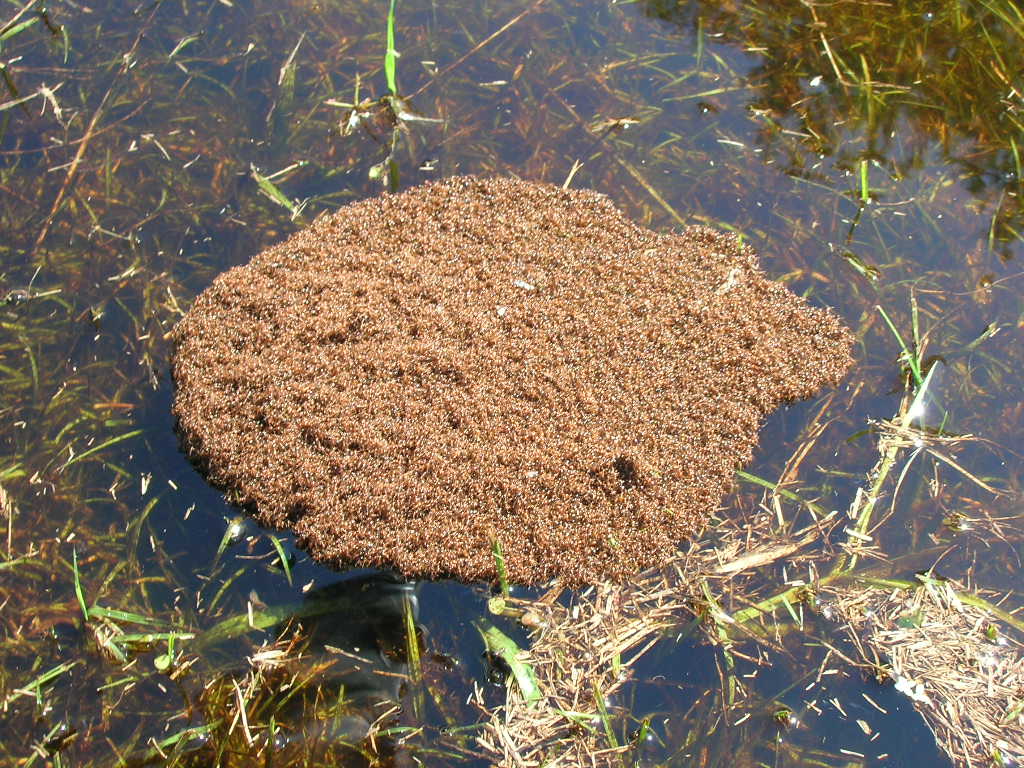
Working women who are going to make it
Photo Credit: Junglecat
Source: https://commons.wikimedia.org/wiki/
File: Fire_ants_cluster_in_water.jpg
Their scientific name Solenopsis invicta indicates their tough and adaptable nature (invicta is
the feminine form of the Latin word Invictus, meaning unconquered). Readers may be familiar with the poem Invictus by William Ernest Hensley, written as he recovered from a series of
painful operations in the late 19th century:
Out of the night that covers me
Black as the pit from pole to pole,
I thank whatever gods may be
For my unconquerable soul.
In the fell clutch of circumstance,
I have not winced nor cried aloud.
Under the bludgeonings of chance
My head is bloody, but unbowed.
Beyond this place of wrath and tears
Looms but the Horror of the shade,
And yet the menace of the years
Finds, and shall find, me unafraid.
It matters not how strait the gate,
How charged with punishments the scroll,
I am the master of my fate
I am the captain of my soul.
As always, there is something to be gained from stopping and thinking about the creatures in your yard and how they make their way in the world. RIFAs may be difficult,
annoying, and ecologically harmful, but they are also tough, adaptable, and worthy opponents of our best efforts. As you go forth to do battle with them, do no underestimate or ignore what they have to offer us.
Authored by Cam Russell
Sources:
https://www.invasivespeciesinfo.gov/terrestrial/invertebrates/red-imported-fire-ant
https://sfyl.ifas.ufl.edu/lawn-and-garden/sustainable-fire-ant-control/
https://www.antwiki.org/wiki/Solenopsis_invicta
https://fireant.tamu.edu/learn/history-of-the-red-imported-fire-ant/
https://www.lsuagcenter.com/topics/environment/insects/ants/fire_ants/bug-biz–fire-ants
https://www.wlf.louisiana.gov/species/detail/red-imported-fire-ant
https://science.psu.edu/news/native-lizards-evolve-escape-attacks-fire-ants
https://ant-pests.extension.org/which-fire-ant-bait-should-i-use/