Pruning Plants Starts With Choosing the Right Tool for Each Job
We get a lot of questions about pruning. How far back should a plant be pruned? What time of year? With what tools? It would be impossible to answer all these questions at one time. So, let’s start at the very beginning, and in the weeks to come, we’ll dive deeper into specific fundamentals of pruning.
When I was old enough to help do yard work at my parents’ house, one of the first things that my dad taught me was to, “Always use the right tool for the right job.” It is such an important lesson to learn, because if you don’t, you risk ruining whatever it is that you’re working with, and you risk your own safety! For this article, we’re talking about pruning. Make sure you use the right pruning tool, to prune the right plants. Here are some of the basic pruning tools and how you should use each of them:
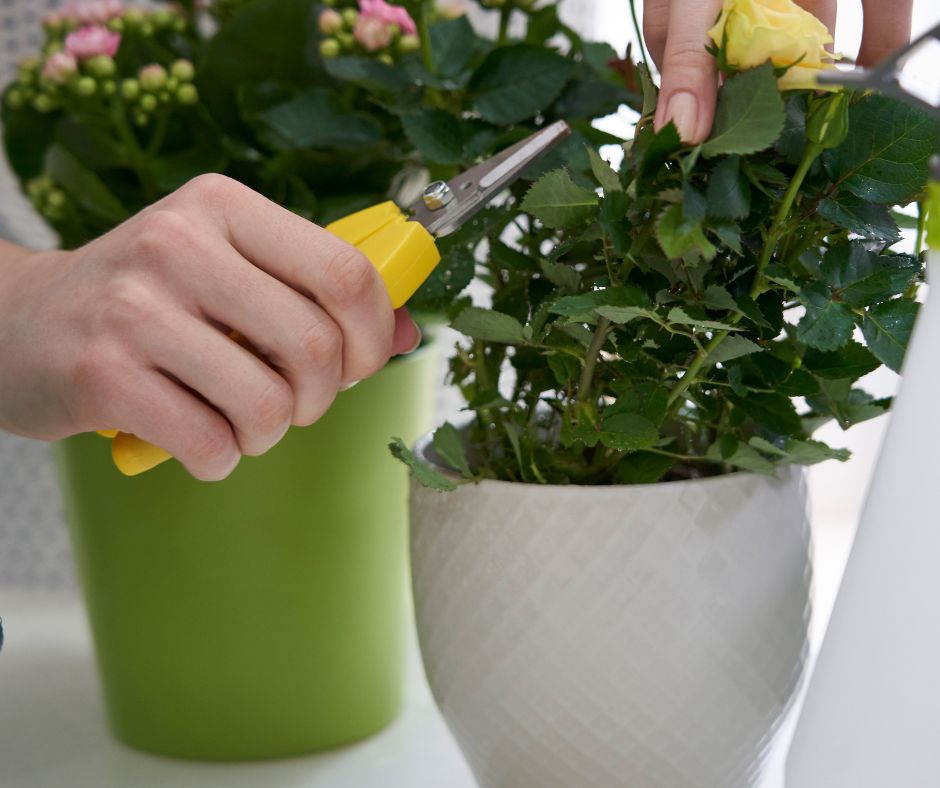
Pruning Snips
Pruning “Snips” are pointy and used for deadheading, trimming a bonsai, or pruning any small herbaceous material, like trimming the suckers off of a tomato plant. Don’t use these for trimming any woody material. Pruning snips are lightweight and are ideal for detail work. Gloves are not required, but if you’re doing a lot of tedious work, you might want to use a thin pair.
(Pruning “Snips” work great for houseplants! We love this guide from Spruce, click ‘here‘ to check it out)
Hand-Pruners
Hand pruners are the next step up from pruning snips. They can be used to trim herbaceous material and smaller woody material. There are many different types of hand pruners, and they will often indicate how girthy of a twig or branch they can cut. So, if it says, “up to 1/2 an inch,” don’t prune anything larger than that, otherwise you might break the pruners, or hurt your hand. I suggest wearing gloves when using these.
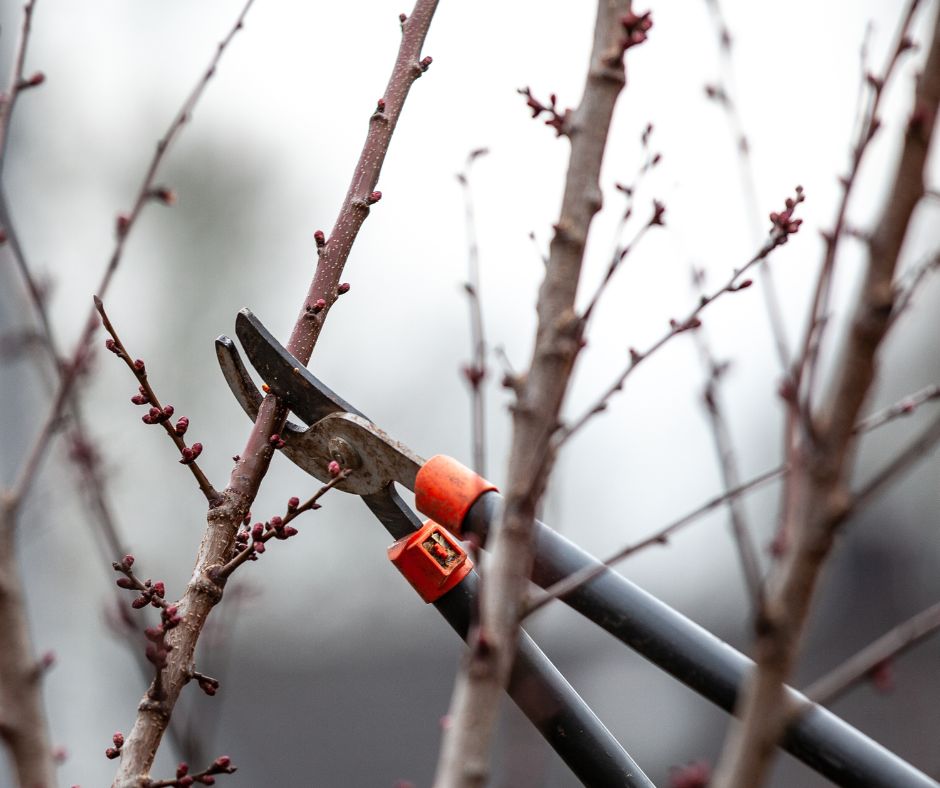
Loppers, Handsaw, Polesaw
Next on the list, are loppers. Loppers can handle larger woody branches than hand pruners. Also wear gloves when using these. And just like the hand pruner, don’t cut anything larger than what is defined. If the loppers say they can cut up to 1.5 inches in diameter, don’t try to cut more than that. You’ll often need (or just want) a pair of loppers when pruning long stem roses, because the long handle on loppers will help you prune hard to reach places.
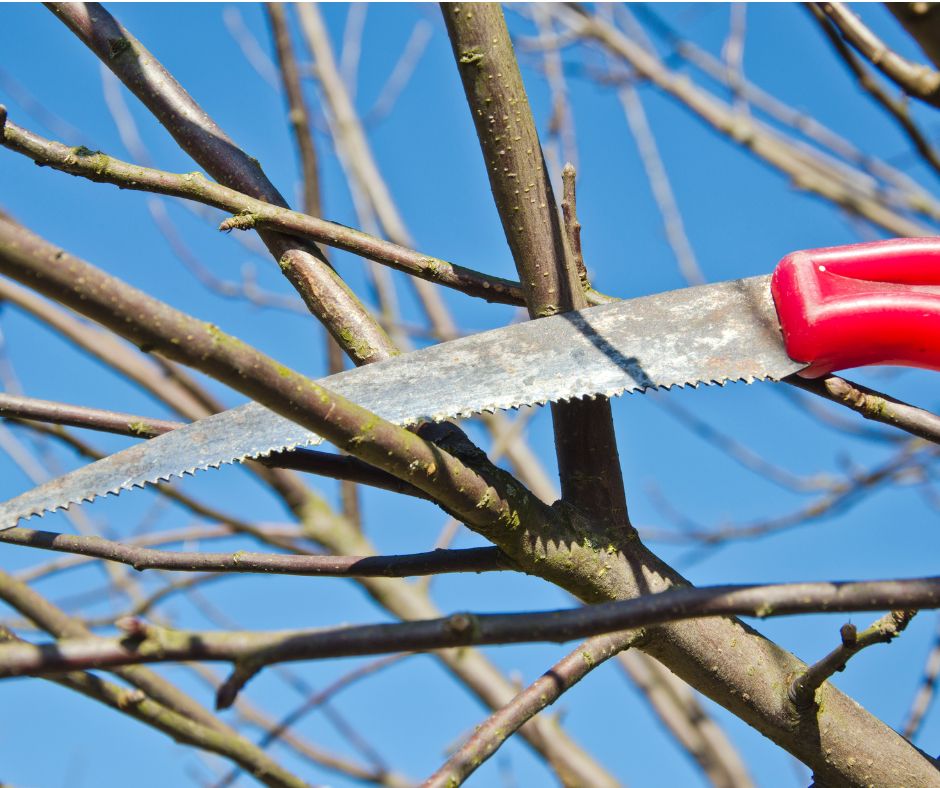
If loppers can’t trim it, then a hand saw can! And if you can’t reach it with a hand saw, then you might need a pole saw. Both are used for trimming branches off trees or large shrubs. A pole saw obviously just can reach higher than a hand saw, and can be an attachment for newer hand saws. Wear gloves and glasses with both!
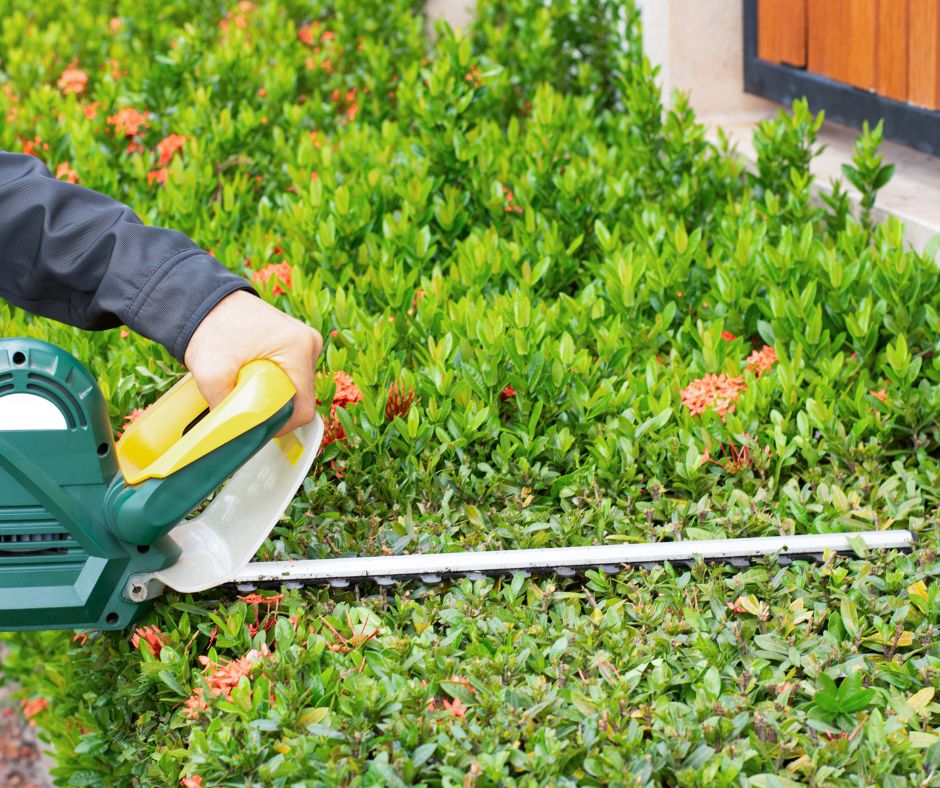
Hedge Trimmers & Power Pruners
And lastly, hedge pruners, and power pruners, both of which are used to shape shrubs such as boxwoods, ligustrum, azaleas and even knockout roses. Depending on the number of shrubs you have to trim, you might want the electric powered trimmers. Use gloves and glasses when using either of these tools.