Camellia Japonica: The Late-Blooming Favorite for Louisiana Gardens
Date:
Why Camellia Japonica Is a Late-Blooming Favorite in Louisiana Gardens
In the Fall & Winter, Camellia Sasanquas offer an absolutely flushed display of flowers, seemingly unparalleled when at their peak. Think of how full of pink or white the two ever-popular shi-shi vareities are: now these impressive bloomers are starting to hit their downswing. All the while, the other half of the Camellia family was taking it at a slower pace.
Camellia Japonicas, distinctive from Sasanquas in their large, dark leaves, love of the shade, and some of the biggest flowers around, also differentiate themselves by consistently blooming later. In this article, we’ll be taking a deep dive into a few of our late-blooming favorite Japonicas, with descriptions and photos of their intricate blooms. We’ll also discuss why – even if you have to wait until the next peak season for beautiful blooms – it may be worth it to plant them right now!
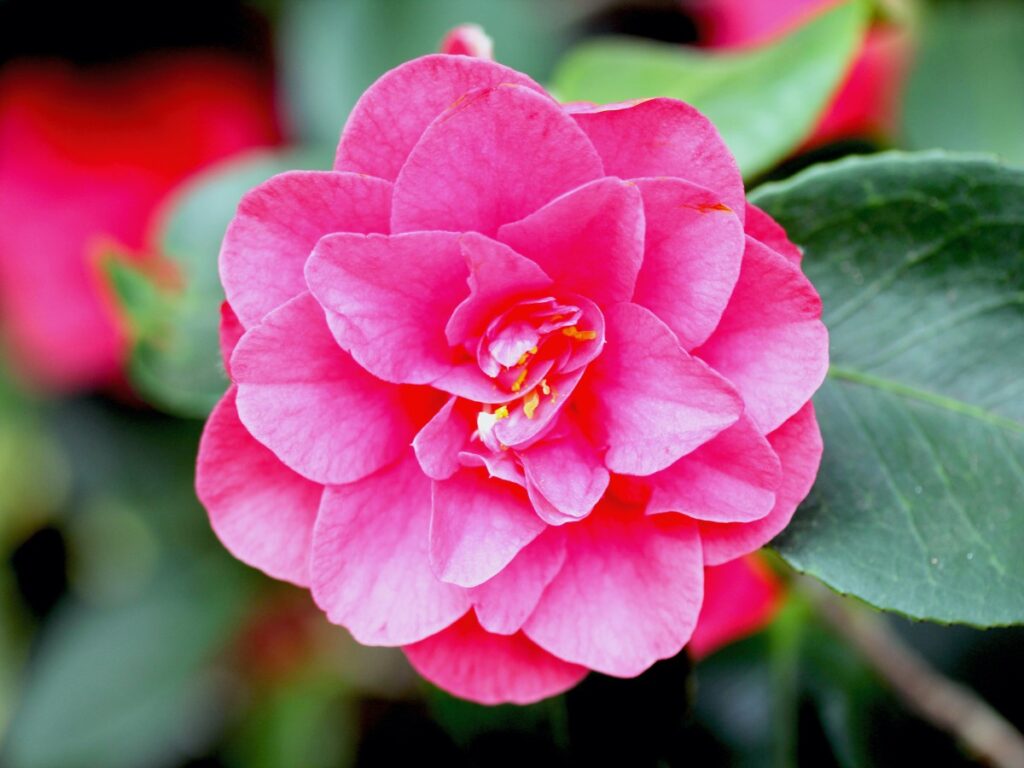
April Remembered
‘April Remembered’ is best known in the horticulture world as being a giant step-up in hardiness & disease resistance, but that doesn’t take away from its exceptionally long blooming period and curb-appeal! This variety produces flowers with vibrant-pink petals that soften towards the center, converging on the bright golden stamen.
Bloom: 4-5 inches wide Bloom Period: Late-Winter to Spring, sometimes until late-March or April. Growth: Somewhat rounded, 8-10′ x 6-8′ Sun: Partial Shade, especially from afternoon sun
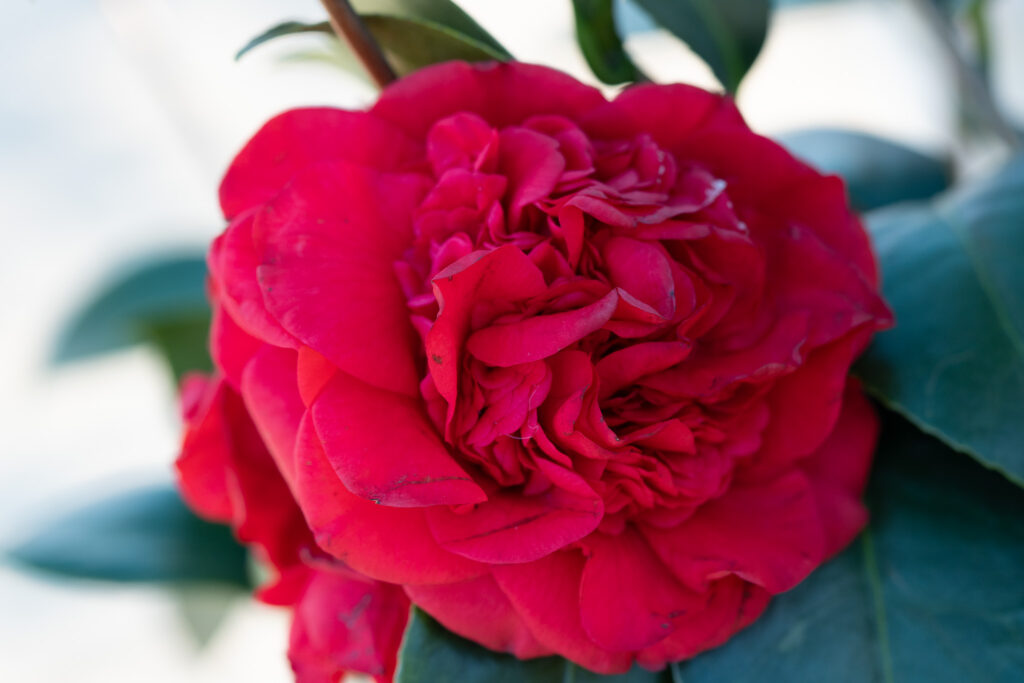
Professor Sargent
A japonica boasting large, deep crimson blooms that unfurl like velvet tapestries. Each petal holds a hint of burgundy, adding richness and depth to the show. Picture this flower contrasting against the backdrop of your emerald lawn – it’s a guaranteed showstopper!
Bloom: 4 inches wide Bloom Period: Late-Winter to Early-Spring Growth: Rounded & dense, 12′ x 10′ Sun: Partial Shade, especially from afternoon sun
“Life’s too short for boring blooms! Give me a camellia, a burst of color against the winter blues, any day.”
– Dolly Parton
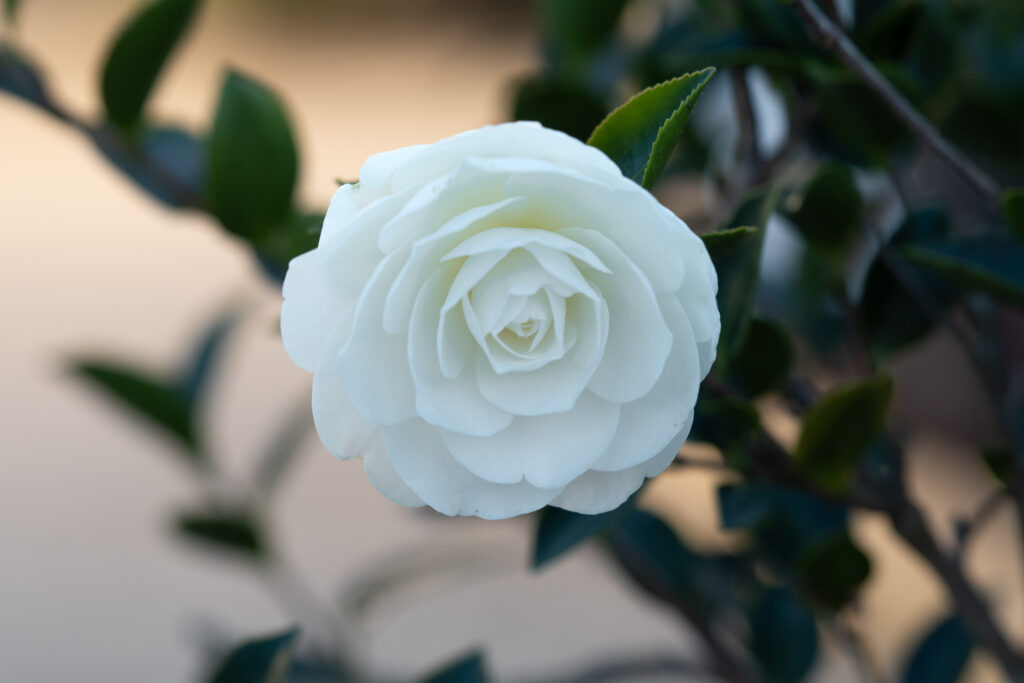
Rose Dawn
Rose Dawn is a japonica true to its name: at peak, the flowers could almost fool you into seeing an oversized rose bloom! Some may disagree, but I would call it firmly pink – if anything a similar shade to the Shi Shi Gashira. What’s not similar is the unique folded structure of the flower, with petals furling over one-another as if trying to conceal whatever is inside.
Bloom: 4-5 inches Bloom Period: Late-Winter to Early-Spring Growth: Vertical & dense, 10-12′ x 6-8′ Sun: Partial Shade, especially from afternoon sun
Does it Make Sense to Buy Camellias in January?
Yes, you can absolutely have success buying camellias right now! For smaller varieties like many of those in the sasanqua family, they’ll do perfectly fine in pots for years and possibly their whole lifetime if it’s a dwarfed variety. Even for the large-growing japonicas, this is handy if you’d prefer to wait to plant in-ground until spring where there isn’t a chance of another frost. In that scenario, you have more options available at the store by shopping ahead while still being able to move the plant inside if necessary.
Having your plant ready to go beforehand and planting early offers many benefits:
Prepare Your Beds: Use gypsum or other amendments to break up compacted / clay in your future plant-bed.
Acidity: Generally, camellias prefer an acidic soil, take the extra step to create the perfect environment for them!
Establishment: Once in the ground, your camellia will have multiple seasons to establish a root structure and get acclimated to its new microclimate. The more established your shrub, the better it will handle adverse conditions like freezes / droughts. You’ll also have a larger plant by the time blooming season comes around, meaning a larger flush of color when it matters!