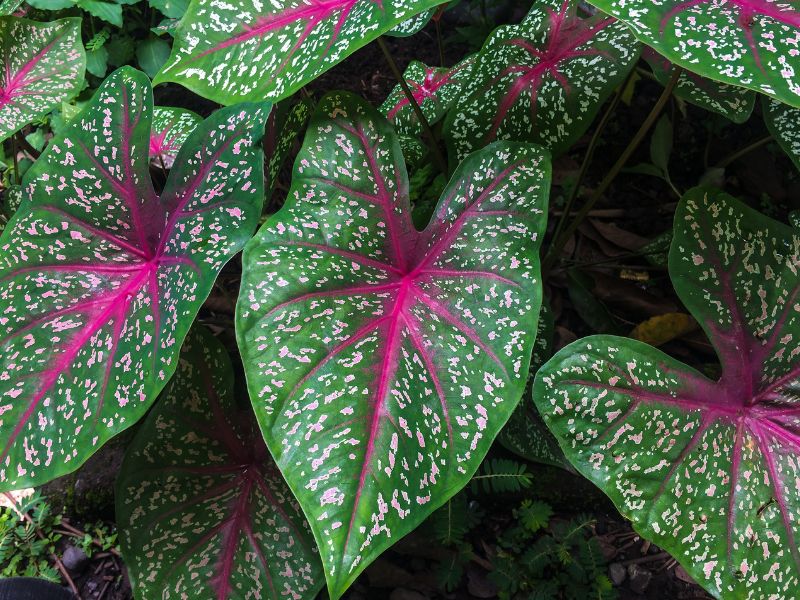
South Louisiana provides a near perfect climate for the beautifully intricate foliage of caladiums. Their kaleidoscope of colors and patterns are a fantastic alternative to blooms, filling a difficult niche in majority shady areas of the landscape. While many caladium varieties can be purchase pre-sprouted, the best selection (and prices) come from planting their bulb-form instead.
Successfully growing caladiums from bulbs doesn’t need to be intimidating: Let’s get into the process from start to finish!
When, Where, and How to Plant Caladium Bulbs for a Colorful Louisiana Garden
- Timing is Key: In South Louisiana, wait until the soil has warmed significantly, and the threat of frost has completely passed. Typically, this means late April or early May. Soil temperatures should be consistently above 70°F (21°C). Planting too early can lead to rot.
- Choosing the Right Location: Caladiums thrive in partial to full shade. Morning sun with afternoon shade is ideal. In our intense summer heat, full sun can scorch their delicate leaves. Look for areas with well-draining soil. Avoid areas that stay waterlogged.
- Soil Preparation: Caladiums prefer rich, loose, and slightly acidic soil. Amend your soil with plenty of organic matter, such as compost or well-rotted manure. This will improve drainage and fertility.
- Selecting and Preparing the Tubers: Choose firm, healthy tubers. Look for tubers with multiple “eyes” (buds). If you want to encourage earlier sprouting, you can “pre-sprout” the tubers indoors a few weeks before planting. Place them in a shallow tray with moist peat moss or potting mix, keeping them in a warm, bright location.
- Planting the Tubers: Dig a hole about 2 inches deep. Place the tuber with the “eyes” facing upwards. Space the tubers about 8-12 inches apart, depending on the variety. Cover them with soil and gently firm the surface.
- Watering: Water thoroughly after planting. Caladiums need consistent moisture, especially during their active growth period. In our humid climate, monitor the soil moisture and water when the top inch feels dry. Avoid overwatering, as this can lead to tuber rot.
- Mulching: Apply a layer of mulch around the plants to help retain moisture, suppress weeds, and regulate soil temperature. Pine straw, shredded bark, or compost are excellent choices.
Caladiums Throughout the Season
- Fertilizing: Caladiums benefit from regular feeding. Use a balanced, water-soluble fertilizer every 4-6 weeks during the growing season.
- Pinching: If you want bushier plants, pinch off the center bud when the plants are about 4-6 inches tall.
- Dealing with Pests and Diseases: Keep an eye out for common pests like slugs and snails. Preventative measures and prompt action are key. Rot can be a problem in overly wet conditions, so ensure proper drainage.
- Enjoying the Show: Caladiums typically reach their peak in mid-summer. Their vibrant colors will brighten your garden until cooler temperatures arrive.
Overwintering Considerations
In South Louisiana, we have the option of leaving the tubers in the ground or digging them up for storage.
- Leaving Them In-Ground: If you choose to leave them in the ground, cut back the foliage after it dies back in the fall. Mulch heavily to protect the tubers from potential cold snaps.
- Digging and Storing: For more reliable overwintering, dig up the tubers after the foliage has died back. Allow them to dry for a few days, then store them in a cool, dry place (around 60°F or 15°C) in peat moss or vermiculite.
Caladiums are a delightful addition to any South Louisiana garden. Their vibrant colors and easy-going nature make them a rewarding choice for both novice and experienced gardeners. By following these guidelines, you can cultivate a stunning display of these tropical beauties and enjoy their captivating presence throughout the summer.